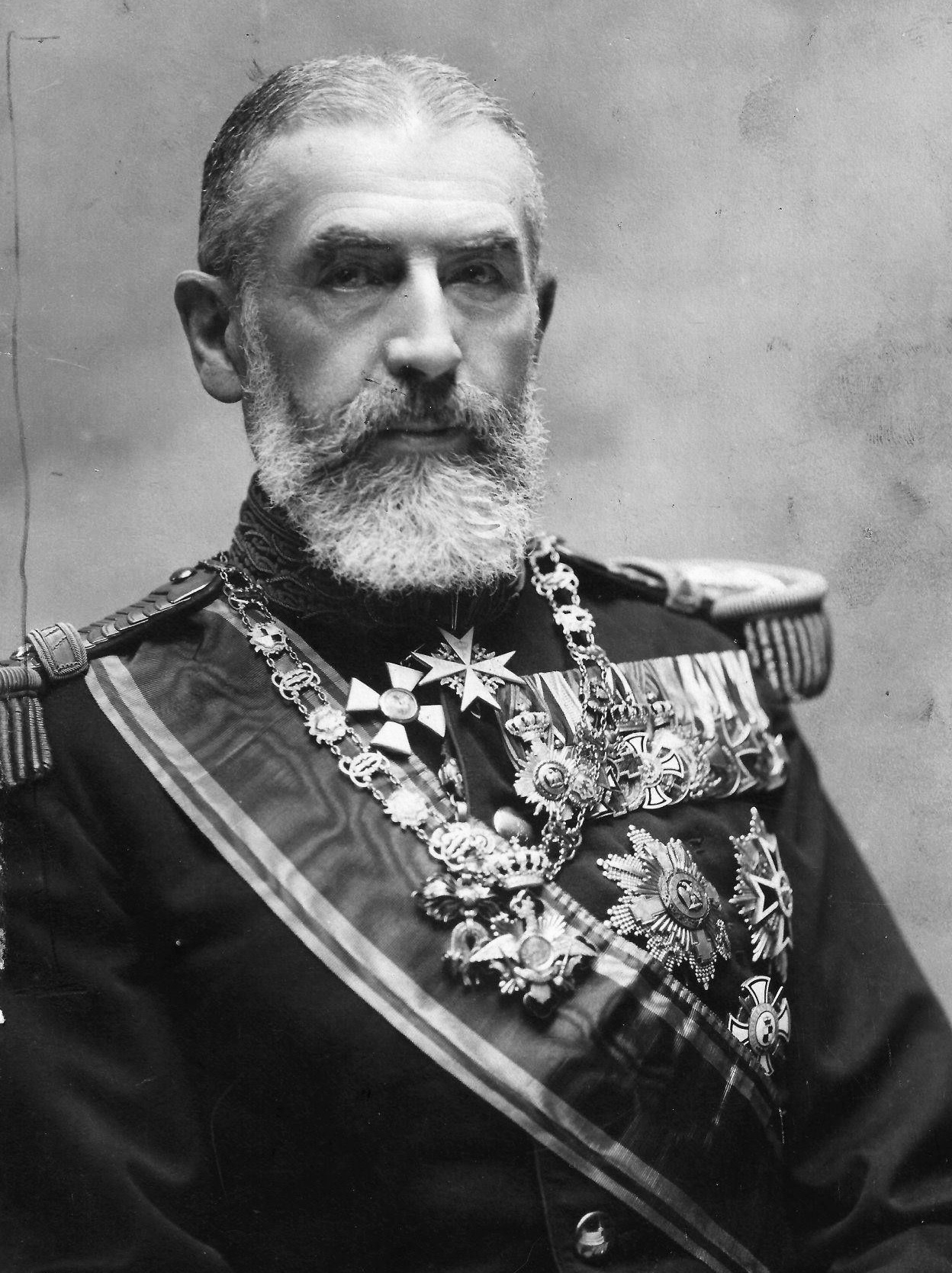
Carol I of Romania
Born April 20, 1839 in Sigmaringen, Hohenzollern-Sigmaringen, Germany
April 20, 1839
Sigmaringen, Hohenzollern-Sigmaringen, Germany0
0 likes103
Updated just nowThe extraordinary journey of Carol I of Romania began not in fame, but in quiet determination, a bold vision, and a resolve to stabilise a fragile emerging state. Born on 1839-04-20 in Sigmaringen, Hohenzollern-Sigmaringen, he entered a European landscape marked by dynastic rivalries and accelerating national ambitions. Drawing from the disciplined ethos of his Prussian upbringing, he advanced into Romanian politics with an almost austere sense of purpose.
Emerging rulers of the era often wrestled with divided societies, yet Carol approached this challenge with a structural pragmatism reminiscent of his contemporary, King Leopold II, albeit directed toward national consolidation rather than personal empire. Rooted in this philosophy, Romania's 1866 Constitution took shape under his stewardship, signalling a deliberate shift toward institutional durability. Modern transport networks, expanding rail lines, and an assertive foreign policy soon followed, each reinforcing his conviction that state-building required both order and ambition.
Fuelled by the momentum of these reforms, Romania's bold bid for independence during the Russo-Turkish War of 1877-78 marked a defining turning point. Victory did not merely reshape borders; it reframed the kingdom's self-image. Subsequent decades saw cultural investments flower-Peleș Castle becoming a tangible emblem of Romania's European aspirations-while financial crises, international pressures, and civic dissent tested his resilience. Navigating these obstacles demanded a blend of ethical clarity and strategic flexibility, qualities he exercised with notable consistency.
Comparisons with other constitutional monarchs of his age underscore the distinctiveness of his method: where some ruled symbolically, he transformed abstractions of national progress into concrete reforms, often against considerable resistance. Decades later, Carol I's indelible impact endures - inspiring new generations across Romania and beyond, leaving us with the enduring lesson that disciplined vision can convert national uncertainty into lasting transformation.
Career & Achievements
- Romanian Constitution (1866)
- Railway Modernization Program (1869–1900)
- Peleș Castle Construction (1873–1914)
- Romanian War of Independence Leadership (1877–1878)
- Proclamation of the Kingdom of Romania (1881)
- Economic Stabilization Measures (1880s)
- Military Reforms and Modernization (1870s–1900s)
- Diplomatic Consolidation of Romania's Independence (1878–1883)
Personal Details
Latest News
The Art Newspaper
Christie's withdraws El Greco painting tied to King Carol I after Romanian government objects
Auction house Christie's pulled El Greco's Saint Sebastian - once owned by Carol I of Romania - from its New York sale after Romanian officials claimed the work is part of the nation's patrimony. A legal team representing Romania has begun proceedings at the Paris tribunal aiming to recover the painting. The intervention marks a renewed effort to reclaim art from the former Royal Crown collection.
Artnet News
Romania blocks $9M El Greco sale tied to Carol I royal collection
Just days before its planned auction, Christie's withdrew the El Greco work after objections from the Romanian state, which argued that the painting belonged to the Crown under Carol I's bequest. The painting was estimated at $7-9 million and its sale was halted while authorities pursue legal recovery. The case underscores tensions over heritage works removed during exile and contested ownership after 1947.
PolymerNotes / National Bank of Romania
Romania issues commemorative 100-lei banknote for King Carol I 185th anniversary
The National Bank of Romania released a special polymer 100-lei banknote on 1 December 2024 to celebrate the 185th birth anniversary of Carol I. The design features his portrait alongside symbols like his Peleș Castle and the Star of Romania insignia. The note seeks to honour his legacy and reaffirm his role in Romania's modern statehood.
Basilica.ro
Romanians observe Monarchy Day remembering Carol I's arrival in Bucharest 1866
On 10 May 2025, services and memorial events marked the anniversary of Prince Carol's arrival in Bucharest in 1866 - later crowned king - underscoring his foundational role in Romanian national identity. Clergy and royal-history supporters cited his efforts in unifying and modernising the country, framing monarchy as a 'mission to serve.' The commemoration reflects enduring respect for his contributions even more than a century after his death.
FAQ
Why is Carol I considered a pivotal figure in Romanian history?
Carol I is regarded as a pivotal figure because he transformed Romania from a fragile principality into a consolidated, internationally recognized kingdom. His leadership during the War of Independence proved decisive in securing sovereignty. Over the decades, he strengthened institutions, modernized the military, and promoted economic development. These combined efforts laid the foundation for modern Romanian statehood.
What motivated Carol I to accept the Romanian throne in 1866?
His acceptance stemmed from a combination of dynastic opportunity, personal ambition, and a belief in constitutional governance. Romania's political elites sought a stable foreign prince to bolster legitimacy, and Carol saw a chance to apply Prussian-style discipline to a young nation. His decision also reflected confidence in Romania's potential despite regional volatility. This alignment of interests set the stage for a long and transformative reign.
How did Carol I contribute to Romania's independence?
He played a central military and diplomatic role during the Russo-Turkish War of 1877-78, commanding Romanian forces with strategic precision. His coordination with Russian allies, while politically delicate, was essential for battlefield success. After the war, he worked persistently to secure international recognition of independence. These efforts cemented Romania's status among European nations.
What were Carol I's main domestic reforms?
His reforms spanned infrastructure, finance, military modernization, and cultural development. The expanding railway system improved economic integration across the country. Institutional reforms anchored constitutional governance, promoting greater political stability. Cultural initiatives such as the construction of Peleș Castle symbolised Romania's aspirations toward European sophistication.
How did Carol I handle financial crises during his reign?
Carol I responded to financial instability by enforcing fiscal discipline and encouraging foreign investment. He often mediated disputes between political factions to maintain stability. These measures helped Romania avoid the worst outcomes of regional economic downturns. His insistence on long-term planning prevented deeper structural failures.
What was Carol I's relationship with other European monarchs?
His relationships were shaped by diplomacy and pragmatic alliances. Coming from the Hohenzollern-Sigmaringen line, he maintained close ties with German states while balancing Romania's need for autonomy. Interactions with other monarchs often revolved around security concerns in the Balkans. These engagements helped Romania navigate shifting geopolitical currents.
Why is Peleș Castle associated so strongly with Carol I?
Peleș Castle was personally commissioned by Carol I and embodied his vision for a modern, cultured kingdom. The castle's architecture represented a blend of European artistic themes that mirrored Romania's aspirations. Its construction also stimulated local economic activity and symbolized national pride. Today, it remains one of Romania's most recognisable heritage sites.
How long did Carol I's influence last after his death?
His influence extended well beyond 1914, shaping political expectations and institutional culture for decades. Many of his reforms endured through turbulent periods, including wars and regime changes. His emphasis on infrastructure and governance continued to guide national development. For many historians, his reign marks the true beginning of Romania's modern identity.
⚔️ Who's More Influential?

Yeena Blaze🩷🪐⚡️
Content Creator

Treasure
Content Creator
👆 Click on your favorite to vote