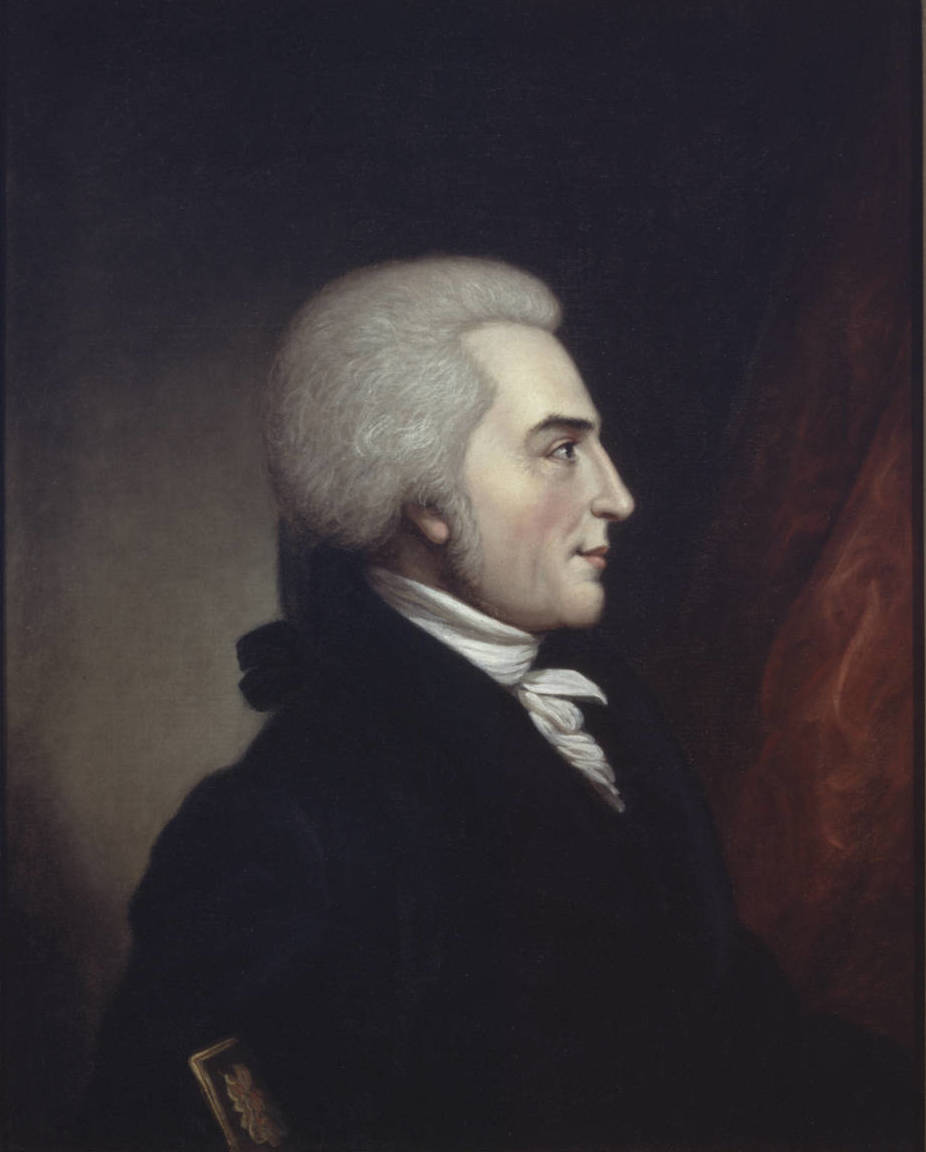
William Richardson Davie
Born June 22, 1756 in Egremont, Cumberland, England
June 22, 1756
Egremont, Cumberland, England0
0 likes68
Updated just nowBorn in the bustling streets of Egremont, Cumberland, England, William Richardson Davie transformed early dislocation and frontier hardship into stepping stones toward unimaginable greatness. Raised in the Carolina backcountry after his family crossed the Atlantic, he learned quickly that volatile borders, scarce resources, and shifting loyalties demanded sharp judgment and relentless discipline.
Consequently, his military service during the American Revolution became a laboratory for strategy and leadership. As a cavalry officer in the Southern campaigns, he blended daring raids with careful intelligence-gathering, turning small units into instruments of disruption against British supply lines. Those years on horseback forged a habit of methodical planning that later guided his civilian projects.
Moreover, the law offered him a new battlefield. Trained as an attorney in North Carolina, he approached the courtroom like a campaign map, clarifying statutes, shaping precedent, and arguing for a more coherent legal order in a young republic still testing its institutions. In this role, he helped define how a state could translate revolutionary ideals into workable governance.
From that foundation emerged his most enduring creative project: the design of a public university meant to cultivate civic-minded leaders. As the driving force behind the establishment of the University of North Carolina in 1789, he treated curriculum, funding, and governance as interlocking parts of a single system. Education, in his view, functioned as infrastructure, as vital as roads or courts to the survival of self-government. That integrated design introduced a replicable approach to state-sponsored higher learning that later reshaped public universities across the United States.
Despite this ambitious vision, he did not escape strain. Lingering war wounds, political rivalries, and the burdens of diplomacy-including his mission to France during the tense quasi-war-tested his stamina and resolve. Yet he met suspicion of centralized power and skepticism toward learned elites with a steady insistence that informed citizens formed the only reliable defense against tyranny.
Ultimately, his career as governor, diplomat, legislator, and educational architect illustrated a coherent philosophy: build durable institutions, then trust them more than personalities. The University of North Carolina, his legal reforms, and his constitutional work all followed that blueprint, influencing how the United States linked law, learning, and public duty. The whispers of William Richardson Davie's genius echo still, a testament to a life dedicated to public service and institution-building and marked by the founding of the University of North Carolina (1789).
Career & Achievements
- Service as cavalry officer in the American Revolutionary War (1779–1781)
- Delegate from North Carolina to the U.S. Constitutional Convention (1787)
- Architect of North Carolina constitutional amendments and judicial reforms (1780s–1790s)
- Founding of the University of North Carolina and service as key trustee (1789)
- Governor of North Carolina (1798–1799)
- Envoy Extraordinary and Minister Plenipotentiary to France during the quasi-war (1799–1800)
- Leadership in organizing North Carolina's legal education and bar standards (1790s)
Personal Details
Latest News
Visit Halifax County / Historic Halifax State Historic Site
Restored William R. Davie House Reopens with Ribbon-Cutting in Halifax
Historic Halifax State Historic Site in Halifax, North Carolina, is marking the completion of extensive restoration work on the William R. Davie House with a public ribbon-cutting ceremony on 2025-12-05. The late-18th-century home of William and Sarah Davie, built in 1783, will reopen as part of the 'Yuletide by Lanternlight' event, with the house now incorporated into regular tours. Organizers highlight the project as a major step in interpreting Davie's life, his legal and political career, and his role in early North Carolina. The free ceremony precedes an evening candlelight tour program designed to draw visitors into the broader Revolutionary-era landscape he helped shape.
University of North Carolina Press
UNC Press Reissues Definitive William Richardson Davie Biography
The University of North Carolina Press has released a new 2025 edition of Blackwell P. Robinson's full-length biography 'William Richardson Davie.' The volume revisits Davie's career as a Revolutionary War officer, framer of the U.S. Constitution, founder of the University of North Carolina, and 10th governor of North Carolina. Marketed as a comprehensive, document-based study, the reissue positions the book as the key scholarly reference on Davie's life. Booksellers note that the updated release makes a classic work on early North Carolina and U.S. political history widely accessible to contemporary readers and researchers.
The University of North Carolina at Chapel Hill
UNC Honors Four with 2024 William Richardson Davie Awards for Service
On 2024-10-22, the UNC-Chapel Hill Board of Trustees announced four recipients of the 2024 William Richardson Davie Award, the university's highest honor. The award recognizes extraordinary service to the institution or to society, reflecting Davie's legacy as founder of the university and architect of public education in the state. The 2024 honorees-W. Frank Dowd IV, Virginia Ann Foxx, Walter E. Hussman Jr., and Paul R. Newton-were cited for decades of leadership, philanthropy, and public engagement. Coverage of the ceremony underscores how the award continues to link modern university governance with Davie's original vision for civic-minded leadership.
The University of North Carolina at Chapel Hill
Six Leaders Receive 2023 William Richardson Davie Awards at UNC
On 2023-11-14, UNC-Chapel Hill reported that its Board of Trustees had presented six individuals with the 2023 William Richardson Davie Award. The honor, established in 1984, recognizes exceptional service to the university or to broader society, keeping Davie's public-service ethos at the center of campus recognition. The 2023 recipients-Terrence V. Burroughs, William W. 'Bill' Cobey Jr., Edith A. Hubbard, Charles E. 'Chuck' Lovelace Jr., Genna Rae McNeil, and Dwight D. Stone-represent contributions across athletics, alumni leadership, scholarship, and civic work. University communications framed the awards as a reminder of Davie's enduring influence on UNC's mission and culture.
FAQ
Who was William Richardson Davie?
William Richardson Davie was a British-born American statesman, Revolutionary War officer, and North Carolina governor who helped found the University of North Carolina.
What is William Richardson Davie best known for?
He is best known for leading the creation of the University of North Carolina and shaping early North Carolina law and governance.
When was William Richardson Davie born and when did he die?
He was born on June 22, 1756, in Egremont, England, and died on November 5, 1820, in South Carolina.
What role did William Richardson Davie play in the American Revolution?
He served as a cavalry officer in the Southern theater, using mobile tactics and intelligence-gathering to disrupt British operations.
How did William Richardson Davie influence the University of North Carolina?
He designed its structure, advocated state support, and helped shape its mission as a public institution dedicated to training civic leaders.
What government positions did William Richardson Davie hold?
He served as governor of North Carolina, a delegate to the U.S. Constitutional Convention, and an envoy to France during the quasi-war.
Why is William Richardson Davie important in North Carolina history?
He helped institutionalize public education, refine state law, and anchor North Carolina's role in the early United States.
Did William Richardson Davie contribute to American legal development?
Yes, as an attorney and legislator he advanced judicial reforms and contributed to the professionalization of the legal system in North Carolina.
What challenges did William Richardson Davie face in his career?
He contended with war injuries, political rivalries, and skepticism about centralized institutions while pushing for strong public frameworks.
How is William Richardson Davie remembered today?
He is remembered as a key architect of UNC, a pragmatic Revolutionary leader, and a strategist of durable civic institutions in the early republic.
⚔️ Who's More Influential?

Evie Slater
Content Creator

Evermoon
Content Creator
👆 Click on your favorite to vote